Trauma & Development
Understanding Shock Trauma, Developmental Trauma, and Complex PTSD Through a Somatic Framework
Written by Dirk Marivoet, founder of Core Strokes®
Trauma & Development — Core Definition
Within Core Strokes®, trauma is understood as a developmental reorganization of embodied participation emerging when overwhelming experience exceeds the organism’s capacity for regulation, integration, relational safety, or metabolization.
Rather than being approached solely as memory, diagnosis, or nervous system dysregulation, trauma is understood as an adaptive restriction of breath, fascia, emotional regulation, intensity tolerance, relational participation, and embodied continuity.
Healing therefore involves not only symptom reduction, but the gradual restoration of developmental capacity through breath, fascia, movement, intensity pacing, and relational co-regulation.
Trauma and the Body
Trauma affects more than memory or emotion.
It affects the body.
Traumatic stress may alter breathing patterns, muscular tension, fascia, posture, nervous system regulation, emotional responsiveness, and the organism’s ability to remain present in relationship.
Many people living with trauma experience symptoms such as:
- chronic tension
- shallow breathing
- hypervigilance
- emotional overwhelm
- numbness or dissociation
- shutdown or collapse
- difficulty feeling safe in closeness
- cycles of activation and exhaustion
From a somatic psychotherapy perspective, these are not random symptoms.
They are embodied survival adaptations.
The body reorganizes in response to overwhelming, unpredictable, or unsupported experience.
Within Core Strokes®, trauma is understood not only as unresolved memory, but as a restriction of embodied developmental capacity — the capacity to feel safe, remain connected, tolerate intensity, and participate coherently within life.
Trauma as Restricted Development
Trauma does not only disrupt memory.
It reorganizes the body.
Over time, this reorganization may appear as:
- restricted breathing patterns
- chronic muscular or fascial tension
- collapse or rigidity
- hypervigilance or shutdown
- difficulty sustaining relational contact
- oscillation between activation and numbness
These are are adaptive reorganizations of the nervous system and connective tissue network.
From a Core Strokes® perspective, trauma narrows access to essential capacities:
- the ability to breathe freely under activation
- the ability to remain connected in closeness
- the ability to tolerate intensity without fragmentation
- the ability to rest into safety
Healing, therefore, is not merely symptom reduction.
It is developmental restoration.
→ Related essay: Trauma as Restricted Development
Visualizing Trauma as Restricted Development
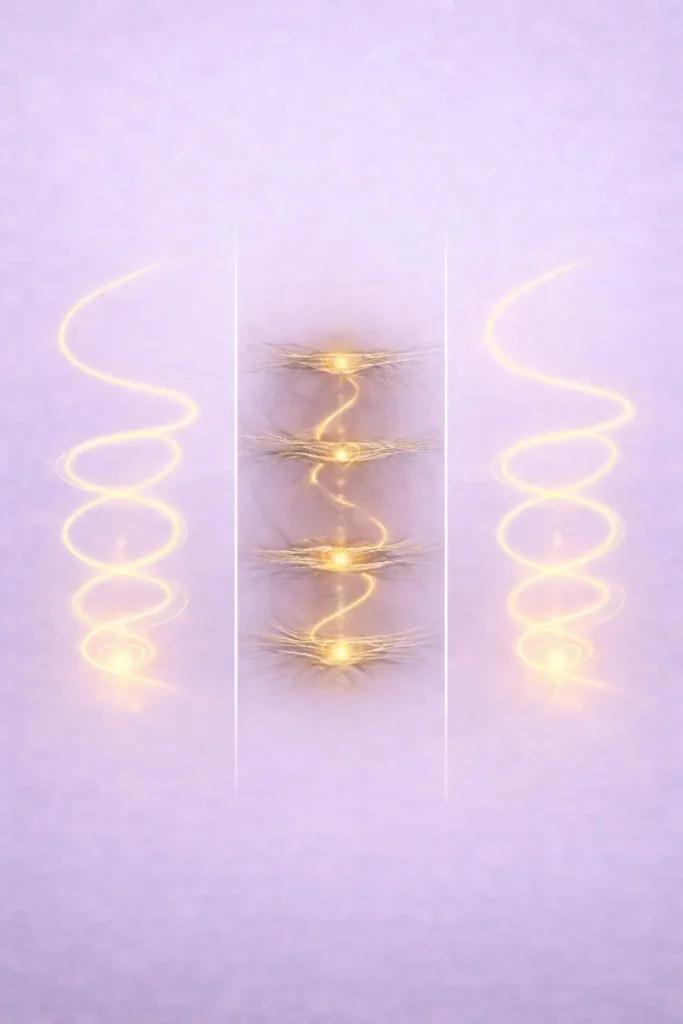
The following diagram illustrates how developmental trauma may compress the organism’s natural capacity for embodied expansion, regulation, and relational participation.
How Trauma Is Stored in the Body
Trauma is often described as being “stored in the body.”
Within somatic psychotherapy, this refers to the ways overwhelming experience becomes organized through physiology, movement, tissue tone, emotional regulation, and relational readiness.
Trauma may become visible through:
- breathing restriction
- chronic contraction
- fascial rigidity
- loss of vitality
- emotional flooding
- dissociation
- autonomic instability
- postural bracing
- difficulty relaxing or settling
The organism adapts intelligently to survive difficult conditions.
Over time, however, these adaptations may become habitual organizational patterns affecting how safety, connection, and intensity are experienced.
Core Strokes® works directly with these embodied patterns through:
- breath regulation
- fascial responsiveness
- intensity pacing
- movement awareness
- relational co-regulation
- developmental sequencing
Rather than forcing catharsis or emotional exposure, the work gradually expands embodied capacity.
Shock Trauma
Shock trauma usually emerges from a single overwhelming event that exceeds the organism’s immediate regulatory capacity.
Examples may include:
- accidents
- assaults
- medical emergencies
- sudden loss
- disasters
- acute threat
Shock trauma often involves:
- incomplete survival responses
- frozen activation
- intrusive memories
- autonomic dysregulation
- startle responses
- hyperarousal or shutdown
Many trauma therapies focus effectively on resolving these acute shock responses.
Core Strokes® includes this dimension while situating shock trauma within a broader developmental framework of embodied regulation.
Shock trauma is understood as an interruption in the organism’s rhythmic organization of breath, activation, and relational participation.
Developmental Trauma & Attachment Trauma
Developmental trauma unfolds gradually over time.
It often emerges through repeated relational misattunement, emotional neglect, chronic instability, intrusive contact, abandonment, or insufficient support during formative periods.
Unlike single-event trauma, developmental trauma shapes how the organism learns to organize:
- safety
- identity
- closeness
- emotional regulation
- breathing patterns
- intensity tolerance
- embodied presence
Attachment trauma particularly affects relational participation.
The question becomes:
- Can closeness remain safe?
- Can support be received?
- Can autonomy coexist with connection?
- Can emotional intensity be tolerated without fragmentation?
Rather than reducing these dynamics to attachment labels alone, Core Strokes® observes how relational organization appears somatically through breath, fascia, posture, movement, and emotional responsiveness.
→ Related: Core Strokes® and Attachment Trauma
Complex PTSD (C-PTSD)
Complex PTSD reflects prolonged exposure to relational overwhelm, chronic unpredictability, emotional instability, or repeated developmental disruption.
It may include:
- emotional dysregulation
- chronic hypervigilance
- identity instability
- dissociation
- shame
- relational distrust
- fragmentation under stress
- oscillation between activation and collapse
From a developmental somatic perspective, complex PTSD is not simply accumulated stress.
It reflects a broader reorganization of embodied developmental capacity.
Breathing may become shallow or held.
Fascial continuity may become rigid, dense, collapsed, or fragmented.
Intensity may feel either unbearable or inaccessible.
Relational contact may trigger fear, withdrawal, or destabilization.
Healing therefore requires gradual restoration of regulation, continuity, and embodied participation.
→ Related: Core Strokes® and Complex PTSD
Breath and Trauma
Within Core Strokes®, breathing is understood as a developmental organizer.
Breath influences:
- safety
- activation
- emotional expression
- energetic regulation
- relational openness
- surrender and rest
Trauma frequently alters breathing patterns.
Common trauma-related breathing adaptations include:
- shallow upper-chest breathing
- held breath
- interrupted breathing
- collapse under activation
- restricted exhalation
- difficulty sustaining charge
These patterns are not failures.
They are adaptive responses that once helped preserve survival.
Restoring breathing flexibility gradually restores access to developmental capacities such as grounding, receptivity, vitality, curiosity, and emotional continuity.
This understanding is explored through the Energetic Breath Cycle™, which maps how different breathing organizations shape emotional and relational life.
Fascia and Embodied Trauma
Trauma affects not only the nervous system, but also the body’s connective tissue organization.
Fascia participates in:
- posture
- movement
- tension distribution
- proprioception
- interoception
- breath propagation
- energetic continuity
Under chronic stress or developmental overwhelm, fascial organization may become:
- rigid
- collapsed
- fragmented
- over-braced
- under-responsive
These organizational patterns influence how intensity spreads throughout the body and whether activation feels containable or overwhelming.
Within Core Strokes®, the Fascia Texture Typology™ describes recurring phenomenological patterns observable through tissue responsiveness, elasticity, density, continuity, and relational contact.
This work is further developed through Neurofascial Encoding™, which explores how lived experience becomes embodied through breath, fascia, movement, and relationship.
Somatic Trauma Therapy and Developmental Healing
Somatic trauma therapy works directly with the body’s organization of experience.
Rather than focusing exclusively on cognition or narrative memory, it addresses how trauma appears through:
- breathing
- tissue organization
- autonomic regulation
- emotional responsiveness
- movement
- relational participation
Within Core Strokes®, healing unfolds through:
- breath continuity
- fascial responsiveness
- intensity pacing
- developmental sequencing
- relational co-regulation
The goal is not emotional overwhelm or catharsis.
It is increasing capacity.
Healing gradually unfolds as:
Safety → Capacity → Coherence → Integration
As regulation stabilizes, the organism requires less defensive effort to remain present within embodied and relational life.
Beyond Trauma: Development and Integration
Trauma repair is not the endpoint of the Core Strokes® framework.
As developmental organization reorganizes, the work naturally expands toward:
- embodied vitality
- relational sovereignty
- emotional maturity
- pelvic–heart coherence
- creativity
- erotic integration
- soul resonance
The process gradually shifts from survival toward fuller participation within life itself.
Frequently Asked Questions About Trauma and Somatic Therapy
What is somatic trauma therapy?
Somatic trauma therapy is a body-based approach to trauma healing that works with how traumatic experience becomes organized in breathing, fascia, nervous system regulation, muscular tension, posture, movement, and relational responsiveness.
Can trauma be stored in the body?
Trauma may become embodied through chronic tension, breathing restriction, autonomic dysregulation, fascial holding, emotional overwhelm, collapse, or dissociation. Somatic psychotherapy works directly with these embodied survival adaptations.
What is developmental trauma?
Developmental trauma refers to trauma that unfolds gradually through repeated relational stress, emotional neglect, instability, intrusive contact, or insufficient developmental support during formative periods.
How is complex trauma different from shock trauma?
Shock trauma often results from a single overwhelming event. Complex trauma develops over time through chronic relational overwhelm, instability, attachment disruption, or prolonged exposure to stress.
How does trauma affect breathing?
Trauma frequently alters breathing patterns through restriction, holding, collapse, shallow breathing, or disrupted respiratory rhythm. These breathing adaptations influence emotional regulation and intensity tolerance.
What role does fascia play in trauma?
Fascia participates in posture, movement, tension organization, interoception, and breath continuity. Chronic stress and trauma may affect fascial responsiveness, elasticity, and continuity throughout the body.
Can somatic therapy help complex PTSD?
Many somatic psychotherapy approaches work effectively with complex PTSD by supporting nervous system regulation, breath continuity, embodied safety, relational stability, and gradual restoration of developmental capacity.
Closing Perspective
Core Strokes® understands trauma not as defect or pathology, but as adaptive reorganization.
The body did what it needed to do to survive.
And what became restricted can gradually reopen.
Through breath, fascia, movement, intensity regulation, and relational presence, embodied organization can reorganize toward greater coherence, vitality, safety, and participation.
Not through force.
Not through overwhelm.
But through the gradual restoration of embodied capacity — one phase at a time.
Part of the Core Strokes Trauma Series
This page is part of an ongoing series exploring trauma as a developmental reorganization of embodied participation within the Core Strokes® framework.
Rather than approaching trauma solely as symptom formation or nervous system dysregulation, the series explores how developmental overwhelm shapes breath, fascia, emotional regulation, energetic organization, relational participation, and the organism’s capacity to sustain coherent embodied presence.
The series examines how access to fundamental developmental capacities may become restricted — and how these capacities can gradually reorganize through embodied therapeutic work.
📘 Explore the Core Strokes® Trauma Series:
How Core Strokes Works With Trauma—An overview of the developmental and organizational foundations of trauma repair.
Trauma as Restricted Development —How overwhelm narrows access to safety, contact, vitality, and embodied participation.
Breath and Trauma — How breathing organization influences regulation, activation, continuity, and developmental restoration.
Fascia and Trauma — How developmental experience becomes embodied through tissue continuity, responsiveness, and fascial organization.
Intensity as Capacity — Working with strong activation while preserving coherence, metabolization, and relational safety.
Relationship as a Developmental Capacity — How regulation, attachment, and embodied participation develop through relational contact.
Core Strokes® and Complex Trauma —A developmental and embodied approach to chronic relational trauma and fragmentation.
Core Strokes® and Dissociation— Understanding fragmentation, disconnection, and protective withdrawal within embodied organization.
Together, these pages describe how safety, vitality, continuity, and relational presence may gradually reorganize through breath, fascia, movement, emotional regulation, energetic integration, and therapeutic relationship.
Or explore:
Frequently Asked Questions About Somatic Trauma Therapy and Core Strokes®
Below you’ll find clear answers to common questions about somatic trauma therapy, complex PTSD (C-PTSD), attachment trauma, and the Core Strokes® developmental framework.
Closing Perspective
Core Strokes® is a developmental somatic framework rooted in breath, fascia, and relational regulation.
It does not simply treat trauma.
It restores embodied capacity.From that restoration, integration unfolds.
And from integration, relational maturity becomes possible.