About Core Strokes®
Origins, philosophy, and the living path of embodied transformation.
A living bodymind approach where breath, fascia, relationship, and presence become pathways of transformation.
Opening Orientation
Core Strokes® is an integrative bodymind approach within the broader field of somatic psychotherapy — a form of therapeutic and experiential work that understands the body as an essential part of psychological healing, emotional regulation, and human development.
Rather than working only through thoughts, narratives, or interpretation, Core Strokes® works directly with how experience is organized, expressed, and transformed within the living body.
Breath, fascia, posture, movement, emotional expression, energetic regulation, and relational presence are approached not as separate elements, but as interconnected dimensions of embodied life.
At the heart of the work lies a simple yet profound orientation:
when breath regains continuity, tissues regain responsiveness, and relationship becomes safe enough for authentic participation, the organism naturally begins reorganizing itself toward greater coherence, vitality, and presence.
The Heart of the Method
Core Strokes® unfolds through several interconnected dimensions that together form a living map of embodied transformation.



A Professional Bodymind Framework
Core Strokes® is an integrative bodymind approach situated within the broader field of somatic psychotherapy and embodied therapeutic practice.
Rather than working only through thoughts or narratives, the approach explores how experience is organized, expressed, and transformed through breath, fascia, movement, emotional regulation, and relational presence.
The framework integrates perspectives from body-oriented psychotherapy, fascia-oriented approaches, developmental and attachment dynamics, autonomic regulation, energetic organization, and experiential bodymind practice.
Within Core Strokes®, elements such as breath phases, fascial textures, emotional organization, and relational resonance function as living maps for therapeutic process, embodied learning, and human development.
The work is particularly oriented toward therapists, bodyworkers, educators, and professionals seeking to deepen embodied awareness, relational sensitivity, and integrative understanding of the bodymind process.
👉 Learn more about somatic psychotherapy
Origins & Lineage
Where Core Strokes Comes From
Core Strokes® emerged through decades of clinical practice, embodied research, teaching, and therapeutic exploration within the field of body-oriented psychotherapy.
It is rooted in a broad lineage of somatic and energetic approaches exploring the relationship between breath, embodiment, emotion, and consciousness.
Among the strongest influences are Wilhelm Reich, John Pierrakos, Al Pesso, and Jack Painter — together with contemporary fascia research, developmental perspectives, and bodymind integration.
Developed by Dirk Marivoet, MSc, Core Strokes® carries these influences forward into a contemporary bodymind framework integrating breath, fascia, emotional organization, energetic regulation, and relational presence.
At the heart of the work lies a simple orientation:
when breath regains continuity, tissues regain responsiveness, and relationship becomes safe enough for authentic participation, the organism naturally begins reorganizing itself toward greater coherence, vitality, and embodied presence.
What makes Core Strokes® particularly distinctive is its understanding of fascia as living organization — a responsive tissue system carrying both adaptive history and unrealized human potential.
Through breath, touch, movement, and relational attunement, the work supports the restoration of continuity, energetic flow, emotional responsiveness, and embodied vitality.
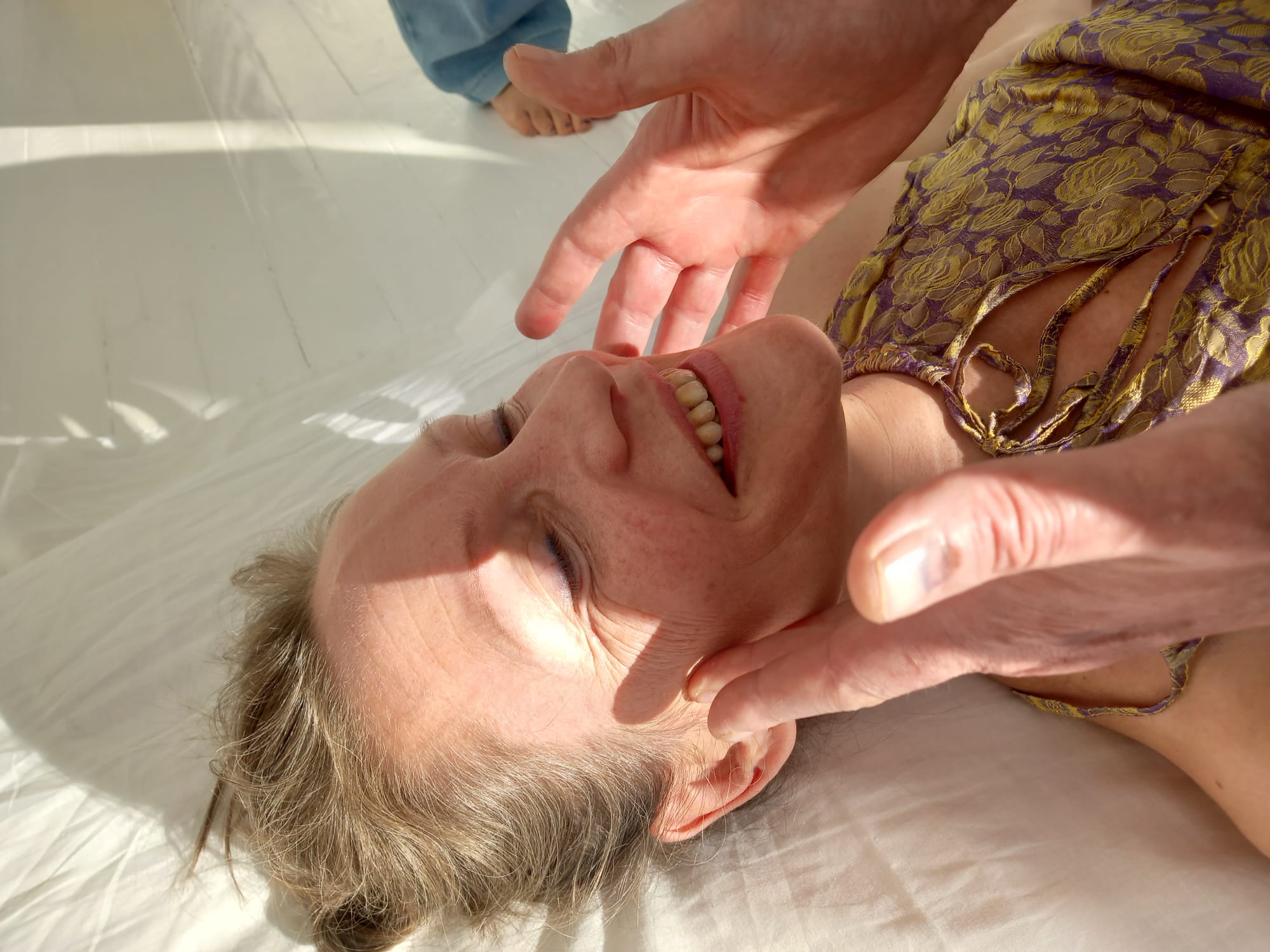
“For me, Core Strokes® emerged from a lifelong exploration of how breath, fascia, relationship, and consciousness organize human experience. My teachers taught me that healing is not something imposed upon the body, but something that unfolds through presence, participation, and embodied contact.”
— Dirk Marivoet, MSc.
“At the CORE, life is movement, breath, and relationship.
When these flow, the body becomes a vessel of presence
— capable of healing, joy, and connection.”