Vorm, Tegenvorm en Contravorm in Core Strokes®
Vorm, Tegenvorm en Contravorm in Core Strokes®
Door Dirk Marivoet · Oprichter van Core Strokes® · Europees Gecertificeerd Psychotherapeut · Onderzoeker in de Somatische Psychotherapie · Auteur
Vorm, Tegenvorm en Contravorm — Een definitie
Op het diepste niveau beschrijven vorm, tegenvorm en contravorm drie elkaar aanvullende bewegingen die in elke relatie aanwezig zijn.
Vorm is de beweging van het organisme naar de wereld.
Tegenvorm is de reactie van de wereld op die beweging.
Contravorm ontstaat wanneer het organisme zich niet langer via wederkerige relatie kan organiseren en zich in plaats daarvan tégen de omgeving organiseert om veiligheid, continuïteit of coherentie te behouden.
Het gaat hierbij niet uitsluitend om houdingen of bewegingspatronen. Het zijn levende uitdrukkingen van de manier waarop het organisme zichzelf via relatie reguleert.
Binnen Core Strokes® worden deze relationele dynamieken rechtstreeks waarneembaar via ademhaling, houding, beweging, fasciale responsiviteit, emotionele expressie, therapeutische aanraking en belichaamde aanwezigheid. Zij onthullen niet alleen hoe ontwikkelingservaringen het organisme hebben gevormd, maar ook hoe nieuwe relationele mogelijkheden zich geleidelijk kunnen ontvouwen binnen het therapeutische proces.
Relatie vormt het lichaam
Mensen ontwikkelen zich binnen relaties.
Vanaf het allereerste begin van het leven organiseert het organisme zich voortdurend in reactie op zijn omgeving. Lang voordat taal ontstaat, ontmoet de baby de wereld via aanraking, beweging, ademhaling, ritme, oogcontact en de ontelbare momenten van contact met verzorgers. Iedere ervaring van gedragen worden, ondersteund worden, gezien worden, gefrustreerd worden, getroost worden, genegeerd worden of overspoeld raken, draagt bij aan de geleidelijke organisatie van het belichaamde leven.
Deze vroege ervaringen blijven niet alleen bestaan als psychologische herinneringen. Ze worden verweven in de levende organisatie van het lichaam. De ademhaling ontwikkelt karakteristieke ritmes, de houding krijgt terugkerende oriëntatiepatronen, beweging wordt steeds meer georganiseerd en het fasciale weefsel weerspiegelt geleidelijk de herhaalde manieren waarop het organisme op de wereld reageert. Ook emotionele regulatie ontwikkelt zich via deze voortdurende cycli van relationele participatie, en niet in afzondering.
Binnen Core Strokes® wordt dit ontwikkelingsproces begrepen vanuit de dynamische wisselwerking tussen vorm, tegenvorm en contravorm. Deze concepten beschrijven hoe het organisme zichzelf voortdurend vormt in relatie tot zijn omgeving. Elke beweging naar contact is een vorm. Elke reactie van de omgeving is een tegenvorm. Wanneer relaties ontoereikend, intrusief, inconsistent of afwezig worden, kan het organisme zich organiseren via een contravorm om veiligheid, coherentie en continuïteit te bewaren.
In plaats van losse gedragingen te beschrijven, maken deze concepten een voortdurende relationele dialoog zichtbaar waardoor de belichaamde organisatie zich gedurende het hele leven ontwikkelt. Ze laten zien hoe relationele ervaringen zich organiseren via ademhaling, houding, beweging, fascia, emotionele regulatie en activiteit van het zenuwstelsel, en uiteindelijk bijdragen aan de stabielere patronen die binnen de lichaamsgerichte psychotherapie worden herkend als karakterorganisatie.
Vanuit dit perspectief beïnvloedt relatie het lichaam niet alleen; zij neemt actief deel aan de voortdurende organisatie ervan. Het organisme vormt zichzelf voortdurend door middel van relatie, en iedere nieuwe relationele ervaring draagt het potentieel in zich om bestaande organisatiepatronen te versterken of juist nieuwe mogelijkheden te openen voor regulatie, vitaliteit en authentieke participatie in het leven.
Van Pesso naar Core Strokes®
De concepten vorm en tegenvorm werden oorspronkelijk ontwikkeld door Albert Pesso en Diane Boyden-Pesso binnen het Pesso Boyden System Psychomotor (PBSP). Hun baanbrekende werk liet zien dat mensen zich voortdurend organiseren via wederkerige lichamelijke interactie met anderen, en dat onvervulde ontwikkelingsbehoeften vaak zichtbaar blijven in houding, beweging en lichamelijke oriëntatie. Door zorgvuldig opgebouwde therapeutische ervaringen toonde PBSP aan dat deze relationele patronen binnen de therapeutische relatie opnieuw beleefd en geleidelijk gereorganiseerd kunnen worden.
Core Strokes® erkent ten volle het belang van deze bijdrage. Het werk van Albert Pesso en Diane Boyden-Pesso heeft een belangrijke deur geopend naar het inzicht dat relatie niet alleen psychologisch wordt beleefd, maar zich voortdurend uitdrukt via het levende lichaam.
Tegelijkertijd breidt Core Strokes® dit relationele perspectief uit tot een breder ontwikkelings- en organisatiekader. Vorm, tegenvorm en contravorm worden niet alleen begrepen vanuit houding en beweging, maar ook vanuit ademhaling, fasciale organisatie, regulatie van het zenuwstelsel, emotionele processen, therapeutische aanraking en belichaamde participatie. Relationele vormgeving wordt daardoor één uitdrukking van een veel omvangrijker proces waarmee het organisme zich gedurende zijn gehele ontwikkeling voortdurend organiseert.
Binnen dit bredere perspectief wordt relationele organisatie onderzocht aan de hand van verschillende complementaire kaarten. De Energetic Breath Cycle™ beschrijft hoe de ademhaling vitaliteit, regulatie en ontwikkelingsprocessen organiseert. De Fascia Texture Typology™ laat zien hoe herhaalde relationele aanpassingen zich belichamen in de responsiviteit van het fasciale systeem. Neurofascial Encoding™ onderzoekt hoe geleefde ervaringen zich geleidelijk stabiliseren binnen de neurofasciale organisatie van het lichaam, terwijl het Neurofascial Transformation Process™beschrijft hoe deze belichaamde patronen zich kunnen reorganiseren door veiligheid, relatie en therapeutische participatie.
Core Strokes® vervangt de oorspronkelijke concepten van vorm en tegenvorm dus niet, maar plaatst ze binnen een meer omvattend begrip van belichaamde ontwikkeling. Relatie wordt niet slechts gezien als een interpersoonlijke gebeurtenis, maar als een organiserend principe dat voortdurend de ademhaling, beweging, fascia, emotionele regulatie en het zich ontwikkelende vermogen van het organisme tot participatie in het leven vormgeeft.
Diagram van het Relationele Vormgevingsproces binnen Core Strokes®, waarin wordt getoond hoe vorm, tegenvorm, contravorm, ademhaling, fascia, Neurofascial Encoding™, karakterorganisatie, therapeutische participatie en belichaamde reorganisatie met elkaar samenhangen binnen de somatische psychotherapie.
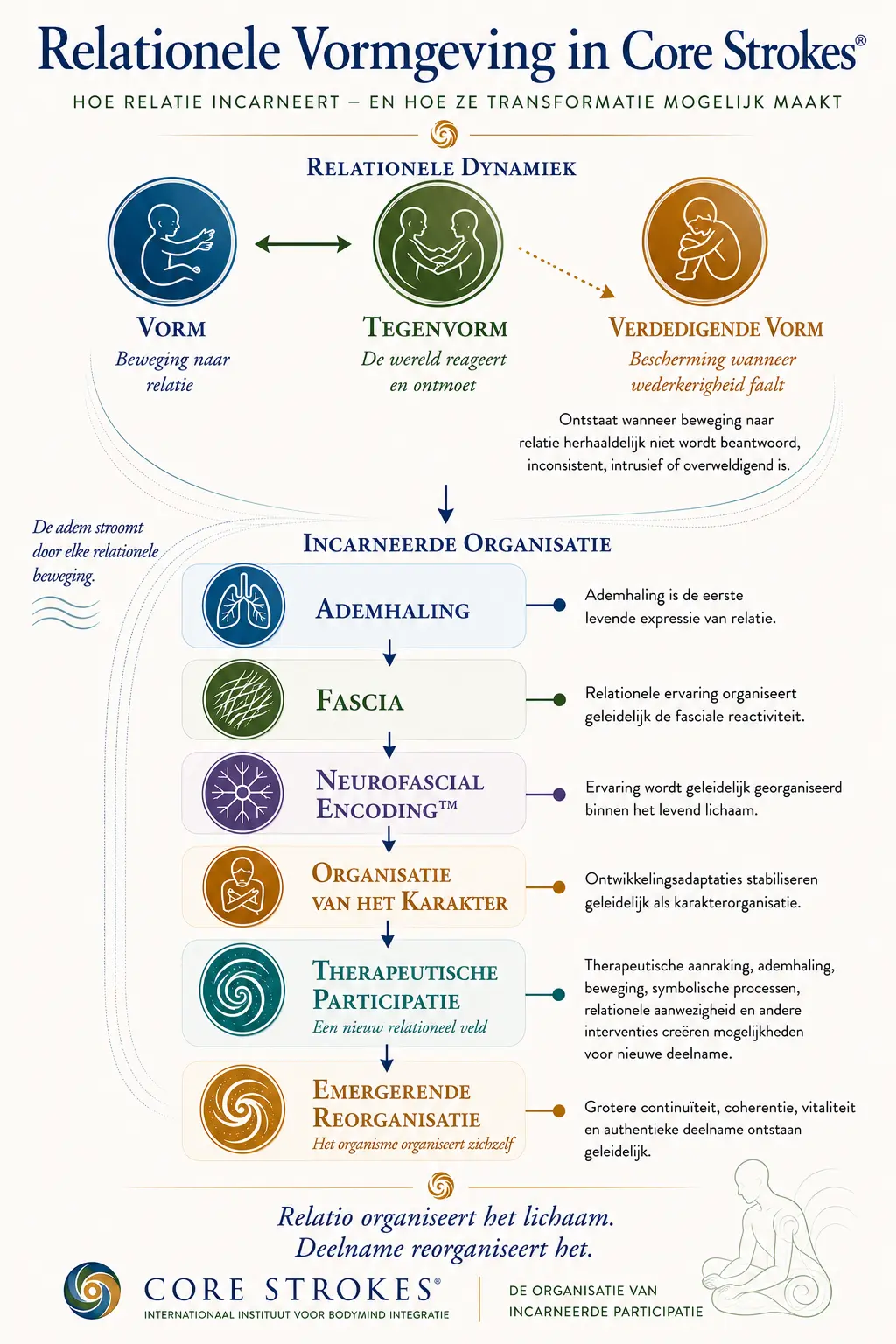
Vorm — De beweging van het organisme naar relatie
Binnen Core Strokes® beschrijft vorm de manier waarop het organisme zichzelf voortdurend vormt in relatie tot de wereld. Elke beweging van het lichaam drukt een oriëntatie uit naar iets of iemand. Reiken, zich wenden, verzachten, voorover leunen, zich openen, zich terugtrekken of zich beschermen zijn niet louter lichamelijke handelingen. Het zijn levende uitdrukkingen van de manier waarop het organisme relatie zoekt, ervaring reguleert en participeert in zijn omgeving.
Vorm ontstaat al lang vóór bewuste intentie. Vanaf de eerste momenten van het leven organiseert de zich ontwikkelende baby zichzelf voortdurend in reactie op de mensen en omstandigheden om hem heen. Een hand reikt naar een verzorger, het lichaam ontspant zich in ondersteunende armen, het hoofd draait naar een vertrouwde stem, de ademhaling verdiept zich wanneer veiligheid wordt ervaren, of het lichaam krult zich op wanneer prikkels overweldigend worden. Dit zijn geen geïsoleerde gedragingen, maar ontwikkelingsbewegingen waardoor relatie zich geleidelijk belichaamt.
Elke vormgevende beweging is een poging om een optimale relatie met de omgeving tot stand te brengen. Soms beweegt het organisme zich met nieuwsgierigheid en openheid naar contact toe. Op andere momenten beschermt het zichzelf door aarzeling, terugtrekking of een verhoogde spierspanning. In alle gevallen handelt het lichaam niet willekeurig. Het reageert intelligent op zijn beleving van veiligheid, mogelijkheden en relationele betekenis.
Binnen Core Strokes® wordt vorm begrepen als een dynamisch proces en niet als een vaste houding. Het organisme hervormt zichzelf voortdurend van moment tot moment, terwijl de ademhaling verandert, de aandacht verschuift, emoties opkomen en relaties zich ontvouwen. Zelfs subtiele veranderingen in blikrichting, gezichtsuitdrukking, organisatie van de wervelkolom of ademritme weerspiegelen dit voortdurende proces van vormgeving. Het levende lichaam is nooit statisch; het neemt voortdurend deel aan een actieve dialoog met zijn omgeving.
Omdat vorm de oriëntatie van het organisme naar relatie uitdrukt, is zij onlosmakelijk verbonden met de ademhaling. Iedere beweging naar de wereld beïnvloedt de organisatie van de ademhaling, terwijl de ademhaling op haar beurt de bereidheid van het lichaam beïnvloedt om te bewegen, zich uit te drukken of contact te ontvangen. Een spontane beweging van nieuwsgierigheid gaat vaak samen met een diepere inademing, terwijl beschermende terugtrekking de ademhaling dikwijls vernauwt en beweging beperkt. Vorm en ademhaling organiseren elkaar daarom voortdurend.
Deze relationele organisatie wordt eveneens zichtbaar in het fasciale systeem. Herhaalde bewegingen van reiken, beschermen, ineenzakken of zich oriënteren beïnvloeden geleidelijk de continuïteit, elasticiteit, hydratatie en responsiviteit van het fasciale netwerk. Gedurende de ontwikkeling worden deze terugkerende patronen steeds sterker belichaamd en dragen zij bij aan de karakteristieke kwaliteiten die later worden beschreven binnen de Fascia Texture Typology™. Vorm laat daardoor niet alleen sporen na in de houding, maar in het volledige levende bindweefselnetwerk van het organisme.
Vanuit dit perspectief is vorm veel meer dan een lichamelijke configuratie. Zij is de voortdurende participatie van het organisme in relatie. Elke beweging drukt een poging uit om contact tot stand te brengen, ervaring te reguleren, continuïteit te bewaren of nieuwe mogelijkheden te ontdekken om zich met de wereld te verbinden. Vorm is de eerste taal van het levende lichaam—een taal die wordt gesproken via ademhaling, beweging, fascia, houding en aanwezigheid, lang voordat woorden beschikbaar zijn.
Vorm — De beweging van het organisme naar relatie
Binnen Core Strokes® beschrijft vorm de manier waarop het organisme zichzelf voortdurend vormt in relatie tot de wereld. Elke beweging van het lichaam drukt een oriëntatie uit naar iets of iemand. Reiken, zich wenden, verzachten, voorover leunen, zich openen, zich terugtrekken of zich beschermen zijn niet louter lichamelijke handelingen. Het zijn levende uitdrukkingen van de manier waarop het organisme relatie zoekt, ervaring reguleert en participeert in zijn omgeving.
Vorm ontstaat al lang vóór bewuste intentie. Vanaf de eerste momenten van het leven organiseert de zich ontwikkelende baby zichzelf voortdurend in reactie op de mensen en omstandigheden om hem heen. Een hand reikt naar een verzorger, het lichaam ontspant zich in ondersteunende armen, het hoofd draait naar een vertrouwde stem, de ademhaling verdiept zich wanneer veiligheid wordt ervaren, of het lichaam krult zich op wanneer prikkels overweldigend worden. Dit zijn geen geïsoleerde gedragingen, maar ontwikkelingsbewegingen waardoor relatie zich geleidelijk belichaamt.
Elke vormgevende beweging is een poging om een optimale relatie met de omgeving tot stand te brengen. Soms beweegt het organisme zich met nieuwsgierigheid en openheid naar contact toe. Op andere momenten beschermt het zichzelf door aarzeling, terugtrekking of een verhoogde spierspanning. In alle gevallen handelt het lichaam niet willekeurig. Het reageert intelligent op zijn beleving van veiligheid, mogelijkheden en relationele betekenis.
Binnen Core Strokes® wordt vorm begrepen als een dynamisch proces en niet als een vaste houding. Het organisme hervormt zichzelf voortdurend van moment tot moment, terwijl de ademhaling verandert, de aandacht verschuift, emoties opkomen en relaties zich ontvouwen. Zelfs subtiele veranderingen in blikrichting, gezichtsuitdrukking, organisatie van de wervelkolom of ademritme weerspiegelen dit voortdurende proces van vormgeving. Het levende lichaam is nooit statisch; het neemt voortdurend deel aan een actieve dialoog met zijn omgeving.
Omdat vorm de oriëntatie van het organisme naar relatie uitdrukt, is zij onlosmakelijk verbonden met de ademhaling. Iedere beweging naar de wereld beïnvloedt de organisatie van de ademhaling, terwijl de ademhaling op haar beurt de bereidheid van het lichaam beïnvloedt om te bewegen, zich uit te drukken of contact te ontvangen. Een spontane beweging van nieuwsgierigheid gaat vaak samen met een diepere inademing, terwijl beschermende terugtrekking de ademhaling dikwijls vernauwt en beweging beperkt. Vorm en ademhaling organiseren elkaar daarom voortdurend.
Deze relationele organisatie wordt eveneens zichtbaar in het fasciale systeem. Herhaalde bewegingen van reiken, beschermen, ineenzakken of zich oriënteren beïnvloeden geleidelijk de continuïteit, elasticiteit, hydratatie en responsiviteit van het fasciale netwerk. Gedurende de ontwikkeling worden deze terugkerende patronen steeds sterker belichaamd en dragen zij bij aan de karakteristieke kwaliteiten die later worden beschreven binnen de Fascia Texture Typology™. Vorm laat daardoor niet alleen sporen na in de houding, maar in het volledige levende bindweefselnetwerk van het organisme.
Vanuit dit perspectief is vorm veel meer dan een lichamelijke configuratie. Zij is de voortdurende participatie van het organisme in relatie. Elke beweging drukt een poging uit om contact tot stand te brengen, ervaring te reguleren, continuïteit te bewaren of nieuwe mogelijkheden te ontdekken om zich met de wereld te verbinden. Vorm is de eerste taal van het levende lichaam—een taal die wordt gesproken via ademhaling, beweging, fascia, houding en aanwezigheid, lang voordat woorden beschikbaar zijn.
Contravorm — Zich organiseren tégen de omgeving
Ontwikkeling vindt niet altijd plaats binnen relaties die consequent afgestemd zijn. Verzorgers kunnen afwezig, intrusief, beangstigend, inconsistent of zelf overweldigd zijn. Onder dergelijke omstandigheden kan het organisme zich niet altijd organiseren via wederkerige vorm en ondersteunende tegenvorm. Toch moet de ontwikkeling doorgaan. In plaats van iedere vorm van organisatie op te geven, ontdekt het organisme een andere mogelijkheid: contravorm.
Contravorm beschrijft het opmerkelijke vermogen van het lichaam om zijn continuïteit te bewaren door zich tégen de relationele omgeving te organiseren. In plaats van zich vrij naar verbinding te bewegen, ontwikkelt het organisme beschermende patronen die de kwetsbaarheid verminderen en tegelijkertijd voldoende samenhang behouden om te kunnen overleven. Deze aanpassingen zijn geen tekenen van pathologie of falen. Het zijn intelligente ontwikkelingsoplossingen voor omstandigheden waarin echte wederkerigheid moeilijk of zelfs onmogelijk is geworden.
Contravorm kan zich op vele manieren uitdrukken. Het lichaam kan zich schrap zetten tegen verwachte intrusie, zich terugtrekken uit overweldigende prikkels, overdreven zelfredzaam worden wanneer ondersteuning ontbreekt, of een chronische spierspanning ontwikkelen die emotionele kwetsbaarheid beschermt. De ademhaling wordt vaak beperkter, beweging verliest haar spontaniteit en het fasciale systeem stabiliseert zich geleidelijk rond terugkerende defensieve patronen. Wat aanvankelijk een flexibele aanpassing was, kan na verloop van tijd een vaste organisatie worden.
Binnen Core Strokes® wordt contravorm daarom begrepen als een uitdrukking van ontwikkelingsintelligentie en niet als een stoornis. Zij bewaart de organisatie wanneer de relatie dat niet kan. Tegelijkertijd kunnen aanpassingen die ooit noodzakelijk waren om te overleven later de vitaliteit, emotionele flexibiliteit, intimiteit en authentieke participatie in het leven beperken. Het organisme blijft zich organiseren volgens relationele omstandigheden die inmiddels niet langer bestaan.
Deze beschermende organisatiepatronen worden geleidelijk zichtbaar in het gehele levende lichaam. Ze beïnvloeden de ademhalingsritmes, de houding, de beweging, de fasciale responsiviteit, de autonome regulatie en de emotionele expressie. Wanneer zij zich gedurende vele jaren herhalen, dragen zij bij aan de stabielere patronen die binnen de lichaamsgerichte psychotherapie worden herkend als karakterorganisatie. Contravorm is daarom niet slechts een defensieve houding, maar een allesomvattende wijze van belichaamde organisatie die door ontwikkelingservaringen is gevormd.
Therapeutisch werk heeft niet als doel contravorm te elimineren. Deze patronen verdienen respect, omdat zij ooit de integriteit van het organisme hebben beschermd. Core Strokes® benadert contravorm daarom met nieuwsgierigheid en erkent de intelligentie die in iedere aanpassing besloten ligt. Naarmate nieuwe ervaringen van veiligheid, regulatie en afgestemde tegenvorm zich geleidelijk kunnen belichamen, ontdekt het organisme dat eerder noodzakelijke vormen van bescherming kunnen verzachten zonder de continuïteit te bedreigen. Transformatie wordt mogelijk, niet doordat contravorm wordt afgebroken, maar doordat nieuwe manieren van zich organiseren in relatie geleidelijk beschikbaar komen.
Ontwikkeling, regulatie en karakterorganisatie
Vorm, tegenvorm en contravorm zijn geen op zichzelf staande relationele gebeurtenissen. Het zijn ontwikkelingsprocessen waardoor het organisme geleidelijk leert zichzelf binnen relaties te reguleren. Elke cyclus van reiken en beantwoorden draagt bij aan de organisatie van de ademhaling, beweging, emotionele regulatie, fasciale responsiviteit en de verwachtingen die toekomstige ontmoetingen met de wereld vormgeven.
Wanneer relationele uitwisselingen voldoende afgestemd zijn, ontwikkelt het organisme een groeiend vertrouwen in zijn vermogen om deel te nemen aan het leven. Reiken naar de ander vormt geen bedreiging meer voor de eigen integriteit. Emotionele expressie kan ontstaan zonder het zenuwstelsel te overweldigen. De ademhaling wordt meer continu, beweging spontaner en het lichaam ontwikkelt geleidelijk een grotere flexibiliteit om zich aan veranderende relationele omstandigheden aan te passen. Het organisme ontdekt dat verbondenheid en autonomie elkaar niet hoeven uit te sluiten, maar naast elkaar kunnen bestaan.
Wanneer relationele ervaringen daarentegen herhaaldelijk inconsistent, intrusief, verwaarlozend of beangstigend zijn, volgt de ontwikkeling een ander verloop. Het organisme gaat steeds sterker steunen op beschermende patronen van contravorm om coherentie te bewaren en kwetsbaarheid te beperken. Wat aanvankelijk ontstaat als een intelligente aanpassing, stabiliseert zich geleidelijk door herhaling. Na verloop van tijd worden deze manieren van zich organiseren vertrouwd en gaan zij niet alleen de houding en beweging bepalen, maar ook de emotionele regulatie, ademhalingsritmes, fasciale organisatie en relationele verwachtingen.
Binnen de lichaamsgerichte psychotherapie worden deze duurzame ontwikkelingsorganisaties traditioneel beschreven als karakterstructuren. Binnen Core Strokes® worden zij echter niet gezien als vaste persoonlijkheidstypen, maar als zich voortdurend ontwikkelende patronen van belichaamde organisatie die ontstaan uit de herhaalde wisselwerking tussen het organisme en zijn relationele omgeving. Karakter is daarom noch een pathologie, noch een identiteit. Het weerspiegelt de wijze waarop het organisme heeft geleerd continuïteit te bewaren, ervaringen te reguleren en deel te nemen aan relaties onder specifieke ontwikkelingsomstandigheden.
Vanuit dit perspectief vormen vorm, tegenvorm en contravorm een belangrijke brug tussen vroege relationele ervaringen en latere karakterorganisatie. Zij maken de levende processen zichtbaar waardoor relationele aanpassingen van moment tot moment zich geleidelijk ontwikkelen tot belichaamde organisatiepatronen die de ademhaling, beweging, fascia, het emotionele leven en het therapeutische proces beïnvloeden. Tegelijk herinneren zij ons eraan dat deze patronen, juist omdat zij binnen relaties zijn ontstaan, zich ook verder kunnen ontwikkelen door nieuwe relationele ervaringen.
Dit ontwikkelingsperspectief verschuift de focus van psychotherapie. In plaats van defensieve patronen rechtstreeks te willen afbreken, probeert Core Strokes® de relationele intelligentie te begrijpen waaruit zij zijn voortgekomen. Therapeutische verandering wordt daardoor minder een kwestie van het corrigeren van het organisme en meer van het scheppen van omstandigheden waarin nieuwe vormen van participatie kunnen ontstaan. Naarmate de ademhaling haar continuïteit hervindt, de fasciale responsiviteit vloeiender wordt en relaties nieuwe ervaringen van veiligheid en wederkerigheid bieden, kunnen eerder rigide organisatiepatronen zich geleidelijk ontwikkelen tot meer flexibiliteit, vitaliteit en coherentie.
Ademhaling, fascia en relationele vormgeving
Binnen Core Strokes® worden vorm, tegenvorm en contravorm nooit uitsluitend als houdingsverschijnselen begrepen. Zij drukken zich uit in het gehele organisme en beïnvloeden de ademhaling, fasciale organisatie, beweging, emotionele regulatie en de activiteit van het zenuwstelsel. Elke relationele beweging heeft daarom zowel een zichtbare als een onzichtbare dimensie. Terwijl de houding laat zien hoe het organisme zich in relatie oriënteert, onthullen de ademhaling en de fascia hoe die relatie van binnenuit wordt beleefd.
De ademhaling is één van de meest directe uitdrukkingen van relationele organisatie. Iedere beweging naar contact beïnvloedt het ademritme, terwijl iedere verandering in de ademhaling op haar beurt het vermogen van het organisme beïnvloedt om zich met de wereld te verbinden. Een spontane beweging van nieuwsgierigheid gaat vaak samen met een diepere inademing, terwijl beschermende terugtrekking de continuïteit van de ademhaling kan beperken. Momenten van veiligheid laten de ademhaling vaak verdiepen en vloeiender worden, terwijl ervaringen van onzekerheid, intrusie of overweldiging haar natuurlijke ritme regelmatig onderbreken. De ademhaling begeleidt het relationele leven dus niet alleen; zij neemt actief deel aan de organisatie ervan.
Het fasciale systeem vormt een tweede essentiële dimensie van dit proces. Als het continue bindweefselnetwerk van het lichaam past het zich voortdurend aan de talloze bewegingen aan waarmee het organisme zijn omgeving ontmoet. Herhaalde gebaren van reiken, zich schrap zetten, ineenzakken, zich afwenden of zich openen naar de ander beïnvloeden geleidelijk de fasciale spanning, elasticiteit, hydratatie en responsiviteit. Na verloop van tijd wordt relationele ervaring daardoor niet alleen zichtbaar in de houding, maar ook in de kwalitatieve organisatie van het levende bindweefsel zelf.
Binnen Core Strokes® worden deze terugkerende kwaliteiten onderzocht met behulp van de Fascia Texture Typology™. Defensieve patronen van contravorm kunnen zich geleidelijk stabiliseren als dichte, rigide, broze of ingezakte fasciale organisaties, terwijl herhaalde ervaringen van veiligheid, ondersteuning en afgestemde tegenvorm vaak bijdragen aan meer elasticiteit, continuïteit en weefselresponsiviteit. Fasciale organisatie weerspiegelt daarom veel meer dan een mechanische aanpassing; zij laat zien hoe het organisme gedurende zijn ontwikkelingsgeschiedenis heeft geleerd aan relaties deel te nemen.
Ademhaling en fascia beïnvloeden elkaar voortdurend. Naarmate de ademhaling meer continu wordt, reageren fasciale weefsels vaak soepeler en gedifferentieerder. Omgekeerd ontstaan, wanneer fasciale beperkingen door therapeutische participatie geleidelijk verzachten, nieuwe mogelijkheden voor vrijere ademhaling, spontaner bewegen en rijkere emotionele expressie. Geen van beide processen stuurt het andere op een lineaire manier aan. Zij nemen deel aan een dynamische wederkerigheid waardoor het organisme zichzelf voortdurend reorganiseert.
Dit inzicht overstijgt een benadering waarin houding, ademhaling of fascia als afzonderlijke klinische observaties worden beschouwd. Samen vormen zij een samenhangende taal die beschrijft hoe relatie zich organiseert binnen het levende lichaam. Vorm, tegenvorm en contravorm worden daardoor niet alleen zichtbaar in uiterlijke bewegingen, maar ook voelbaar in de subtiele ritmes van ademhaling, weefsel en belichaamde responsiviteit. Zij laten zien hoe de relationele geschiedenis voortleeft in het organisme — én hoe deze organisatie zich geleidelijk kan ontwikkelen door nieuwe ervaringen van veiligheid, contact en participatie.
Therapeutische aanraking en relationele reorganisatie
Eén van de onderscheidende bijdragen van Core Strokes® is dat deze processen van relationele vormgeving niet alleen worden geobserveerd, maar ook rechtstreeks kunnen worden waargenomen via therapeutische aanraking. Terwijl houding en beweging bepaalde aspecten van vorm zichtbaar maken, stelt aanraking de therapeut in staat te ervaren hoe deze organisatiepatronen zich uitdrukken in de ademhaling, de fascia, de spierspanning en de levende responsiviteit van het organisme.
Therapeutische aanraking wordt daarom nooit toegepast om een houding te corrigeren of weefsel mechanisch te veranderen. Zij wordt in de eerste plaats een manier om te luisteren naar de reeds aanwezige relationele organisatie. Via zorgvuldig afgestemd contact begint de therapeut waar te nemen hoe het organisme zich naar relatie toe vormt, hoe het tegenvorm ontvangt of verwacht, en waar contravorm nog steeds bescherming organiseert. De handen worden eerst organen van waarneming, voordat zij instrumenten van interventie worden.
Deze perceptuele dialoog ontvouwt zich voortdurend. Iedere aanraking roept een reactie op. De ademhaling kan zich verdiepen of juist beperken. Fasciale weefsels kunnen verzachten, zich verder organiseren, aarzelen of zich terugtrekken. Emotionele expressie kan opkomen of zich tijdelijk terugtrekken. Deze subtiele veranderingen geven voortdurend informatie over de manier waarop het organisme het contact ontvangt en of de relationele voorwaarden verdere participatie ondersteunen. De therapeut past daarom voortdurend de kwaliteit, timing, richting en intensiteit van het contact aan op basis van wat het organisme zelf communiceert.
Binnen dit proces wordt therapeutische aanraking een levende ervaring van tegenvorm. In plaats van verandering van buitenaf op te leggen, biedt de therapeut een responsieve relationele aanwezigheid waardoor het organisme geleidelijk nieuwe mogelijkheden van organisatie kan ontdekken. Beschermende patronen van contravorm worden met respect benaderd, niet met confrontatie, zodat bescherming alleen kan verzachten wanneer nieuwe ervaringen van veiligheid zich werkelijk beginnen te belichamen.
Vanuit dit perspectief ondersteunt therapeutische aanraking veel meer dan veranderingen in het weefsel. Zij neemt deel aan de geleidelijke reorganisatie van de relatie die het organisme met zichzelf en met anderen aangaat. Naarmate de ademhaling haar continuïteit hervindt, de fasciale responsiviteit vloeiender wordt en de relationele participatie zich verdiept, hoeft het organisme niet langer uitsluitend te vertrouwen op vroegere adaptieve strategieën. Vorm, tegenvormen contravorm worden opnieuw levende processen in plaats van starre overlevingspatronen, waardoor nieuwe vormen van vitaliteit, coherentie en authentieke verbondenheid kunnen ontstaan.
Vorm als Belichaamde Participatie
Binnen Core Strokes® beschrijven vorm, tegenvorm en contravorm uiteindelijk veel meer dan relationele bewegingen. Zij maken één van de fundamentele principes van Belichaamde Participatie zichtbaar: het organisme organiseert zichzelf voortdurend door middel van relatie.
Dit perspectief verschuift de aandacht weg van het idee dat het lichaam een verzameling structuren is die gecorrigeerd moeten worden. In plaats daarvan worden houding, ademhaling, beweging, fascia, emotionele regulatie en relationele responsiviteit begrepen als onderling verbonden uitdrukkingen van een levend organisme dat zich voortdurend aanpast aan zijn omgeving. Elk gebaar weerspiegelt een voortdurende dialoog tussen zichzelf en de wereld, tussen continuïteit en verandering, tussen bescherming en openheid.
Vanuit dit perspectief probeert therapeutisch werk niet het ene patroon door een ander te vervangen. Evenmin probeert het contravorm te elimineren enkel omdat deze defensief lijkt. Elk organisatiepatroon heeft ooit een wezenlijke ontwikkelingsfunctie vervuld. Het beschermde de continuïteit wanneer die bedreigd werd. Het bewaakte de coherentie wanneer relaties onbetrouwbaar werden. Respect voor deze ontwikkelingsintelligentie is essentieel wanneer transformatie moet plaatsvinden zonder zelf een nieuwe vorm van intrusie te worden.
Naarmate nieuwe ervaringen van veiligheid, wederkerigheid en Belichaamde Participatie zich geleidelijk ontwikkelen, hoeft het organisme zich niet langer uitsluitend rond vroegere aanpassingen te organiseren. Vorm wordt spontaner. Tegenvorm kan gemakkelijker worden ontvangen. Contravorm verliest geleidelijk haar starheid zonder de wijsheid te verliezen die zij ooit belichaamde. Het organisme ontdekt dat het verbonden kan blijven zonder zichzelf te verliezen, en zichzelf kan beschermen zonder zich uit het leven terug te trekken.
Binnen het bredere Core Strokes®-kader worden deze veranderingen begrepen als uitdrukkingen van toenemende organisatorische coherentie. De ademhaling wordt meer continu, de fasciale responsiviteit vloeiender, beweging wordt flexibeler, emotionele regulatie soepeler en relaties authentieker. Transformatie ontstaat daarom niet doordat nieuwe vormen aan het lichaam worden opgelegd, maar doordat relationele omstandigheden worden gecreëerd waarin het organisme zijn eigen intrinsieke vermogen tot zelforganisatie opnieuw kan ontdekken.
Vorm, tegenvorm en contravorm worden zo veel meer dan bruikbare klinische begrippen. Zij bieden een taal om te begrijpen hoe mensen voortdurend deelnemen aan de vormgeving van hun belichaamde leven. Ze herinneren ons eraan dat iedere relatie sporen nalaat in het lichaam, terwijl ze tegelijk bevestigen dat het lichaam gedurende het hele leven in staat blijft zichzelf opnieuw te organiseren. In die zin is relationele vormgeving niet alleen een verhaal over ontwikkeling, maar ook een verhaal over voortdurende mogelijkheden.
Samenvatting
Vorm, tegenvorm en contravorm beschrijven de levende dialoog waardoor relatie zich belichaamt. Ze laten zien hoe het organisme zich voortdurend organiseert in reactie op contact, ondersteuning, frustratie, afwezigheid en bescherming, en hoe daardoor ademhaling, houding, beweging, fascia, emotionele regulatie en relationele verwachtingen zich gedurende de ontwikkeling geleidelijk vormgeven.
Binnen Core Strokes® worden deze processen begrepen als dynamische en voortdurend veranderende organisatieprocessen. Vorm drukt de beweging van het organisme naar relatie uit. Tegenvorm weerspiegelt het antwoord van de wereld op die beweging. Contravorm vertegenwoordigt de intelligente aanpassingen die continuïteit bewaren wanneer wederkerige relatie onvoldoende beschikbaar, inconsistent of overweldigend wordt. Samen bieden deze begrippen een fenomenologische taal om te begrijpen hoe belichaamde organisatie ontstaat en hoe zij zich geleidelijk kan reorganiseren door therapeutische participatie.
In samenhang met de Energetic Breath Cycle™, de Fascia Texture Typology™, Neurofascial Encoding™ en het Neurofascial Transformation Process™ maken deze concepten deel uit van een breder begrip van Belichaamde Participatie. Zij tonen aan dat transformatie niet ontstaat door het lichaam van buitenaf te corrigeren, maar door het intrinsieke vermogen van het organisme te ondersteunen om nieuwe manieren van participeren te ontwikkelen: vrijer ademen, spontaner bewegen en met meer coherentie, vitaliteit en authenticiteit in relatie te leven.
Het Core Strokes®-kader
Vorm, tegenvorm en contravorm vormen één onderdeel van het bredere begrip van belichaamde organisatie binnen Core Strokes®. Samen met de andere modellen binnen het raamwerk helpen zij therapeuten te begrijpen hoe relatie, ademhaling, fascia, beweging, emotionele regulatie en therapeutische participatie het levende organisme voortdurend vormgeven.
📘 Ontdek de fundamentele bouwstenen van het Core Strokes®-kader:
→ De Organisatie van Belichaamde Participatie
Het fenomenologische fundament van Core Strokes®, waarin wordt beschreven hoe continuïteit, coherentie, permeabiliteit, metabolisatie, defensieve organisatie en relationele geometrie het belichaamde leven organiseren.
→ Energetic Breath Cycle™
Een ontwikkelingsmodel van de ademhaling dat laat zien hoe veiligheid, activatie, emotionele expressie, overgave en herstel zich binnen het organisme ontvouwen.
→ Fascia Texture Typology™
Een fenomenologisch kader dat beschrijft hoe relationele en ontwikkelingservaringen zichtbaar worden in terugkerende kwaliteiten van fasciale organisatie en weefselresponsiviteit.
→ Neurofascial Encoding™
Een model dat beschrijft hoe herhaalde ervaringen zich geleidelijk organiseren via ademhaling, fascia, houding, beweging, autonome regulatie en relationele verwachtingen.
→ Neurofascial Transformation Process™
Een klinisch model dat beschrijft hoe belichaamde organisatie zich geleidelijk reorganiseert door therapeutische participatie, ademhaling, beweging, fascia en relatie.
→ Therapeutische Aanraking
Een belichaamde benadering van therapeutische aanraking die perceptie, regulatie en transformatie ondersteunt door relationele participatie, eerder dan door techniek alleen.
→ Karakterstructuren
Ontwikkelingsadaptaties die ontstaan uit herhaalde relationele vormgeving en zich organiseren via ademhaling, fascia, houding, emotionele regulatie en belichaamde participatie.
→ Soul Textures
Kwaliteiten van belichaamde coherentie die ontstaan wanneer defensieve organisatie zich geleidelijk ontwikkelt naar geïntegreerde vitaliteit, authenticiteit en relationele openheid.
🌿 Deze principes kunnen ook ervaringsgericht worden onderzocht tijdens:
Conclusie — Relatie leeft in het lichaam
Vorm, tegenvorm en contravorm herinneren ons eraan dat menselijke ontwikkeling in wezen relationeel is. Elke beweging naar een ander, iedere ervaring van ontvangen worden en iedere aanpassing aan teleurstelling of intrusie draagt bij aan de voortdurende organisatie van het belichaamde leven.
Binnen Core Strokes® beschrijven deze concepten veel meer dan patronen van houding of beweging. Ze maken zichtbaar hoe ademhaling, fascia, regulatie van het zenuwstelsel, emotionele expressie en relationele participatie elkaar gedurende de ontwikkeling voortdurend organiseren. Relatie beïnvloedt het lichaam niet alleen van buitenaf; zij wordt geleidelijk verweven met de levende organisatie van het lichaam.
Therapeutisch werk probeert daarom niet het ene relationele patroon door een ander te vervangen. Het creëert de voorwaarden waarin het organisme geleidelijk nieuwe manieren kan ontdekken om aan relatie deel te nemen. Naarmate de ademhaling meer continu wordt, de fasciale responsiviteit soepeler wordt en relationele veiligheid dieper wordt belichaamd, hoeft het organisme niet langer uitsluitend te vertrouwen op vroegere beschermingsvormen. Nieuwe mogelijkheden voor coherentie, vitaliteit, flexibiliteit en authentieke participatie kunnen zich geleidelijk ontvouwen.
Uiteindelijk nodigen vorm, tegenvorm en contravorm ons uit om het lichaam te zien als een levende geschiedenis van relaties — én als een levende mogelijkheid voor voortdurende ontwikkeling.